

The Ageing Britain Report, written by carehome.co.uk was published at the end of 2025, and shared insights on residential and respite care from the previous year. It highlighted how demand for care homes is changing.
In the foreword of the report, Tomorrow’s Guides CEO, Will Blackwell said, ‘Insight into the care journey – and how it is changing – can, I hope, shine a light on the pressures and opportunities facing the sector, and support and encourage more families to start planning for future care needs earlier. Most of all, I hope these reports help ensure every person, wherever they live and whatever their circumstances, can access the right care at the right moment.’ Ageing Britain Report
Let’s look at the light the Ageing Britain Report shone on respite care
According to the report, there are currently 5.8 million carers in the UK, with over 3 million also in paid employment. Those people are likely to be juggling work, parenting roles and an unpaid caring role. In fact, more working adults now support an older relative than a child (Office for National Statistics, 2021)
While most care seekers are still searching for residential care, primarily with dementia needs, the report shows a limited growth on the search for respite care.
‘This continues to be an under-utilised option for people needing support and for carers – it can boost wellbeing, support independence, prevent crisis decision making, and allow people to trial a home as part of finding the right one for them.’ (page 15)
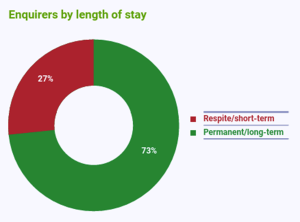
As the report notes, respite care can relieve pressure on the care-giver and prevent a crisis, at which point decisions end up being made hastily and with a more stressful outcome. Crisis-point decision making adds stress to both the care-giver and to the person in need of care because of the added element of uncertainty and time restraints. Could this be the reason why respite care is under-utilised? The fact that it isn’t planned and prepared for…
We found the key takeaways of reading this report were:
- Respite care boosts wellbeing, supports independence and prevents crisis decision making
- People seeking respite care are often at ‘crisis-point’, having reached a point of exhaustion or dire need
- The majority of people seeking respite need help within one month
- Support is required to help families plan financially for respite care
- One-fifth of people do not know how they will be funding care.
We’d like to help you utilise respite care and prevent crisis
We do offer emergency respite care, but we hope you can find the time you need to plan your breaks from your caring role and get good advice on how to fund it. When considering the cost of respite, we’d like you to know that we’re here to support you as much as your loved one. You can utilise respite care to:
- Take an emotional or physical break
- Regain your life balance and put your energy into something else
- Get professional help to continue nursing care.
And all the while, your loved one gets to enjoy our comfortable accommodation with daily living support, delicious and tailored meals and of course all activities and excursions under our nursing care expertise.

Let’s work together to prevent a crisis
Call or email to begin a conversation about yours and your loved one’s needs. Come and visit – stay for a drink or a game and view our facilities. You have as much time as you need to ask any questions and find reassurance that your loved one will be received with care, love, kindness, respect and dignity.
Contact us today to start planning your respite care.